 中文站
中文站 聯系 - 熱線
0531-69953988
 聯系 - 熱線
工業尾氣發電機組應用領域全解析
工業尾氣發電機組作為一種將工業生產中產生的廢氣轉化為電能的設備,既實現了能源的回收利用,又減少了污染物排放,在環保與節能雙重需求下,其應用領域不斷拓展,成為工業綠色發展的重要支撐。
As a device that converts waste gas generated in industrial production into electrical energy, industrial exhaust gas generators not only achieve energy recovery and utilization, but also reduce pollutant emissions. Under the dual demands of environmental protection and energy conservation, their application fields continue to expand, becoming an important support for industrial green development.
在化工行業,工業尾氣發電機組的應用尤為廣泛。化工生產過程中會產生大量富含可燃成分的尾氣,如合成氨生產中的弛放氣(含有氫氣、甲烷等)、甲醇裝置的解析氣等,這些尾氣若直接排放,不僅浪費能源,還會污染環境。工業尾氣發電機組可將這些可燃尾氣作為燃料,驅動內燃機或燃氣輪機運轉,帶動發電機發電,所發電量可直接用于化工企業的生產用電,降低對外部電網的依賴。例如,在煤化工企業中,通過回收焦爐煤氣(主要成分為氫氣、甲烷)發電,每小時可產生數千千瓦時電能,滿足廠區約 30% 的用電需求,同時減少焦爐煤氣燃燒排放的二氧化碳量,實現節能與減排的雙重效益。
In the chemical industry, the application of industrial exhaust gas generators is particularly widespread. During the chemical production process, a large amount of exhaust gas rich in combustible components is generated, such as the release gas from synthetic ammonia production (containing hydrogen, methane, etc.) and the desorption gas from methanol plants. If these exhaust gases are directly discharged, they not only waste energy but also pollute the environment. Industrial exhaust gas generators can use these combustible exhaust gases as fuel to drive internal combustion engines or gas turbines, generating electricity directly for the production of chemical enterprises, reducing dependence on external power grids. For example, in coal chemical enterprises, by recycling coke oven gas (mainly composed of hydrogen and methane) for power generation, thousands of kilowatt hours of electricity can be generated per hour, meeting about 30% of the electricity demand in the plant area, while reducing the amount of carbon dioxide emitted from coke oven gas combustion, achieving dual benefits of energy conservation and emission reduction.
冶金行業是工業尾氣發電機組的另一重要應用場景。鋼鐵廠在高爐煉鐵、轉爐煉鋼過程中會產生高爐煤氣和轉爐煤氣,其中高爐煤氣含有一氧化碳(約 20%-30%),具有一定的熱值。過去,部分鋼鐵企業將高爐煤氣直接點燃放空,既浪費能源又污染大氣。引入工業尾氣發電機組后,可將高爐煤氣凈化處理(去除粉塵、水分)后送入發電機組,產生的電力用于驅動高爐風機、水泵等大型設備,多余電力還可并入電網。在煉鋼廠,轉爐煤氣的回收發電已成為成熟技術,一套中等規模的轉爐煤氣發電機組,年發電量可達數千萬千瓦時,相當于節省標準煤數萬噸,顯著降低企業的能源成本。
The metallurgical industry is another important application scenario for industrial exhaust gas generators. Steel plants produce blast furnace gas and converter gas during the processes of blast furnace ironmaking and converter steelmaking, among which blast furnace gas contains carbon monoxide (about 20% -30%) and has a certain calorific value. In the past, some steel companies directly ignited and vented blast furnace gas, which not only wasted energy but also polluted the atmosphere. After introducing industrial exhaust gas generator sets, the blast furnace gas can be purified (to remove dust and moisture) and sent to the generator sets. The generated electricity is used to drive large equipment such as blast furnace fans and water pumps, and excess electricity can also be integrated into the power grid. In steel mills, the recovery of converter gas for power generation has become a mature technology. A medium-sized converter gas generator set can generate tens of millions of kilowatt hours of electricity annually, which is equivalent to saving tens of thousands of tons of standard coal and significantly reducing the energy costs of enterprises.
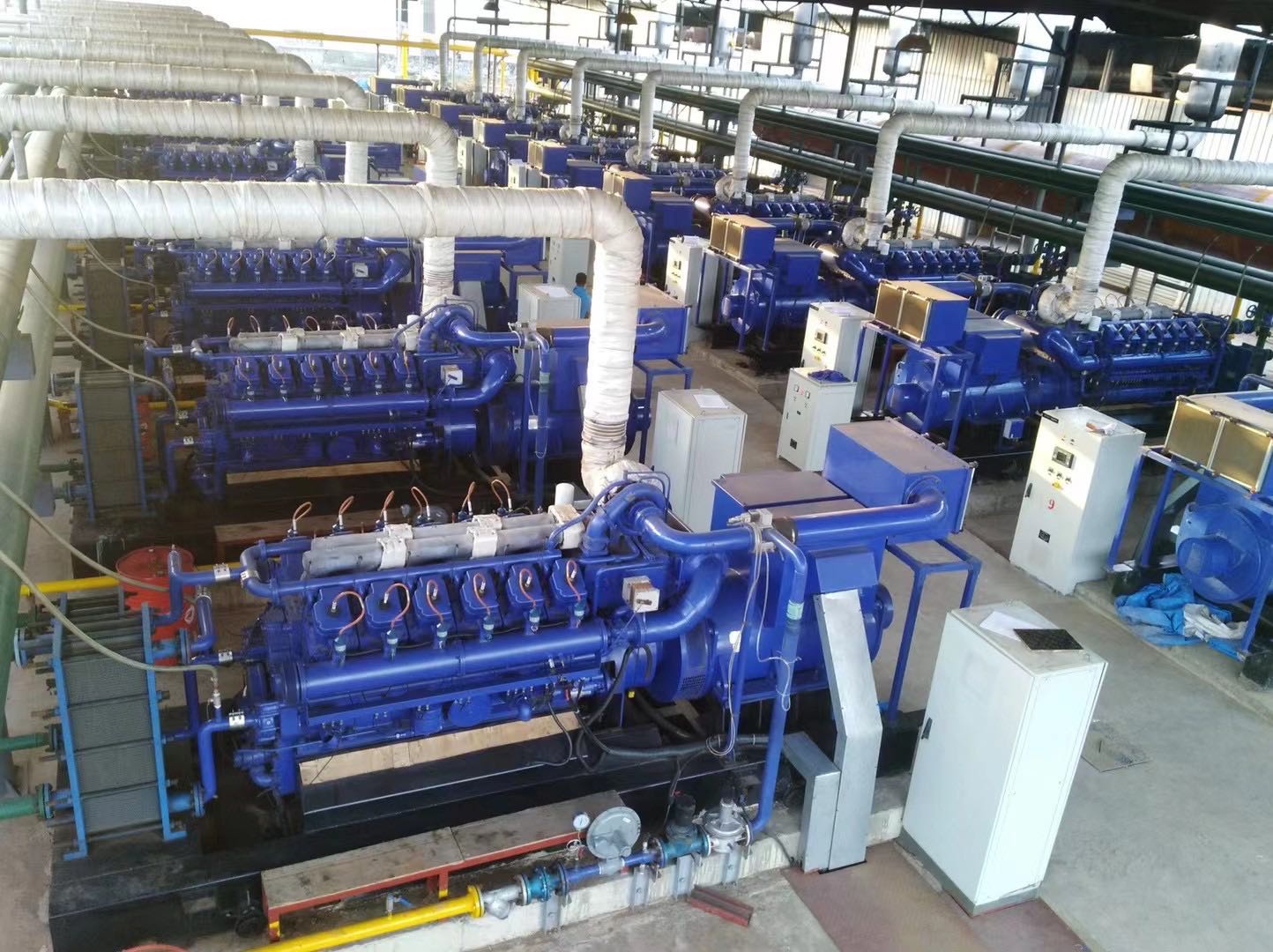
建材行業中的水泥、玻璃生產企業,也越來越多地采用工業尾氣發電機組。水泥窯在煅燒過程中會產生窯尾廢氣,其中含有未充分燃燒的煤粉和可燃氣體,同時廢氣溫度較高(通常在 200-400℃)。工業尾氣發電機組可通過兩種方式利用這些廢氣:一是直接燃燒尾氣中的可燃成分發電,二是利用廢氣的余熱驅動汽輪機發電(即余熱發電機組)。例如,大型水泥企業的窯尾廢氣發電機組,年發電量可滿足企業自身用電的 40% 以上,不僅降低了生產能耗,還減少了因廢氣排放帶來的熱污染。玻璃廠的熔窯尾氣同樣具有回收價值,其高溫特性適合與余熱鍋爐配合,通過朗肯循環實現發電,兼顧能源回收與環保要求。
Cement and glass production enterprises in the building materials industry are increasingly using industrial exhaust gas generators. During the calcination process of cement kilns, exhaust gas is generated at the kiln tail, which contains unburned coal powder and combustible gases, and the exhaust gas temperature is relatively high (usually between 200-400 ℃). The industrial exhaust gas generator set can utilize these exhaust gases in two ways: one is to directly burn the combustible components in the exhaust gas to generate electricity, and the other is to use the waste heat of the exhaust gas to drive the steam turbine to generate electricity (i.e. waste heat generator set). For example, the kiln tail gas generator set of a large cement enterprise can generate more than 40% of its own electricity annually, which not only reduces production energy consumption but also reduces thermal pollution caused by exhaust emissions. The tail gas from the melting furnace of a glass factory also has recycling value, and its high temperature characteristics are suitable for use with waste heat boilers to achieve power generation through Rankine cycle, balancing energy recovery and environmental protection requirements.
在石油石化行業,工業尾氣發電機組多用于處理煉油過程中產生的火炬氣。煉油廠在生產過程中,由于工藝調整、設備檢修等原因,會排放含有丙烷、丁烷等輕質烴類的火炬氣,過去常通過火炬燃燒處理,造成能源浪費。工業尾氣發電機組可將火炬氣收集、壓縮后作為燃料,驅動燃氣發電機組發電,所發電量用于煉油廠的生產和生活用電。例如,在大型煉油基地,一套火炬氣發電機組每年可回收利用數百萬立方米的火炬氣,減少二氧化碳排放數萬噸,同時為企業創造可觀的經濟效益,實現 “變廢為寶”。
In the petroleum and petrochemical industry, industrial exhaust gas generators are often used to treat flare gas generated during the refining process. During the production process of refineries, due to process adjustments, equipment maintenance, and other reasons, flare gas containing light hydrocarbons such as propane and butane is discharged. In the past, it was often treated through flare combustion, resulting in energy waste. The industrial exhaust gas generator set can collect and compress torch gas as fuel to drive the gas generator set to generate electricity, and the generated electricity is used for the production and domestic electricity of the refinery. For example, in a large oil refining base, a torch gas generator set can recycle millions of cubic meters of torch gas annually, reducing tens of thousands of tons of carbon dioxide emissions while creating considerable economic benefits for the enterprise, achieving the goal of "turning waste into treasure".
垃圾處理與生物質能源領域也能看到工業尾氣發電機組的身影。垃圾焚燒發電廠在焚燒垃圾時,會產生高溫煙氣和可燃氣體,工業尾氣發電機組可利用這些煙氣的余熱發電,或直接燃燒垃圾填埋場產生的填埋氣(主要成分為甲烷)發電。在生物質發電站,秸稈、木屑等生物質燃料燃燒產生的尾氣,經凈化處理后可驅動發電機組,進一步提高生物質能源的利用效率。例如,垃圾填埋場的填埋氣發電機組,既能減少甲烷(溫室氣體)排放,又能為周邊居民提供電力,實現環境治理與能源供應的協同發展。
Industrial exhaust gas generators can also be seen in the fields of waste disposal and biomass energy. Garbage incineration power plants generate high-temperature flue gas and combustible gases during the incineration of garbage. Industrial exhaust gas generators can use the waste heat from these flue gases to generate electricity, or directly burn the landfill gas (mainly composed of methane) produced by the garbage landfill to generate electricity. In biomass power plants, the exhaust gas generated from the combustion of biomass fuels such as straw and sawdust can be purified and used to drive the generator set, further improving the utilization efficiency of biomass energy. For example, landfill gas generators in landfills can reduce methane (greenhouse gas) emissions and provide electricity to surrounding residents, achieving coordinated development of environmental governance and energy supply.
本文由工業尾氣發電機組友情奉獻.更多有關的知識請點擊:http://www.peldhb.com我們將會對您提出的疑問進行詳細的解答,歡迎您登錄網站留言.
This article is a friendly contribution from the analysis of gas generator sets For more information, please click: http://www.peldhb.com We will provide detailed answers to your questions. You are welcome to log in to our website and leave a message
業務分類
Business classification產品推薦
product recommendation聯系方式
Contact Information
截屏,微信識別二維碼



 公司地址:山東省濟南市章丘區龍山街道潘王路24239號(龍山工業園八號路)